강아지 병원 스트레스 심박수, 백의 효과란 무엇인가
진료실에서 "심박수가 좀 빠르네요"라는 말을 듣고 집에 와서 강아지 병원 스트레스 심박수를 검색해 보신 분들이 많습니다. "강아지 병원 가면 떨어요" 하는 집이라면 그 숫자가 진짜인지 의심스러울 수밖에 없습니다. 이 현상에는 백의 효과라는 이름이 붙어 있고, 얼마나 차이가 나는지 실제로 재 본 연구도 있습니다. 아래는 일반적인 설명이며, 개별 반려견의 상태에 대한 판단은 담당 수의사의 진료를 통해 이루어져야 합니다.
한눈에 보기
- 강아지 병원 스트레스 심박수가 오르는 현상은 화이트 코트 신드롬(white coat syndrome), 우리말로 백의 효과라고 부르며 진료실에서 재는 과정 자체가 원인입니다.
- 건강한 반려견 30마리를 집과 병원에서 각각 잰 연구에서 맥박은 평균 11%, 수축기 혈압은 평균 16% 높게 나왔습니다(Bragg 등, 2015).
- 반응 크기는 개체마다 달라서 미리 예측할 수 없습니다(ACVIM, 2018).
- 미국수의내과학회는 혈압 측정 전 5~10분의 순응 시간과, 첫 측정값을 버린 뒤 5~7회 평균을 권고합니다(ACVIM, 2018).
- 집에서 쉬는 동안의 값을 며칠치 기록해 두면 병원 수치와 나란히 놓고 볼 수 있습니다.
백의 효과란 무엇인가
백의 효과란 진료실에서 측정하는 과정 자체 때문에 평소에는 정상이던 수치가 올라가는 현상을 말합니다. 영어로는 white coat effect 또는 white coat syndrome 이라고 하고, 한국에서는 화이트 코트 신드롬이라는 표기도 함께 쓰입니다. 미국수의내과학회(ACVIM)가 2018년 발표한 전신성 고혈압 컨센서스는 이를 situational hypertension으로 부르며, "정상 혈압인 동물에서 원내 측정 과정의 결과로 생기는 혈압 상승"이라고 정의합니다(Acierno 등, 2018).
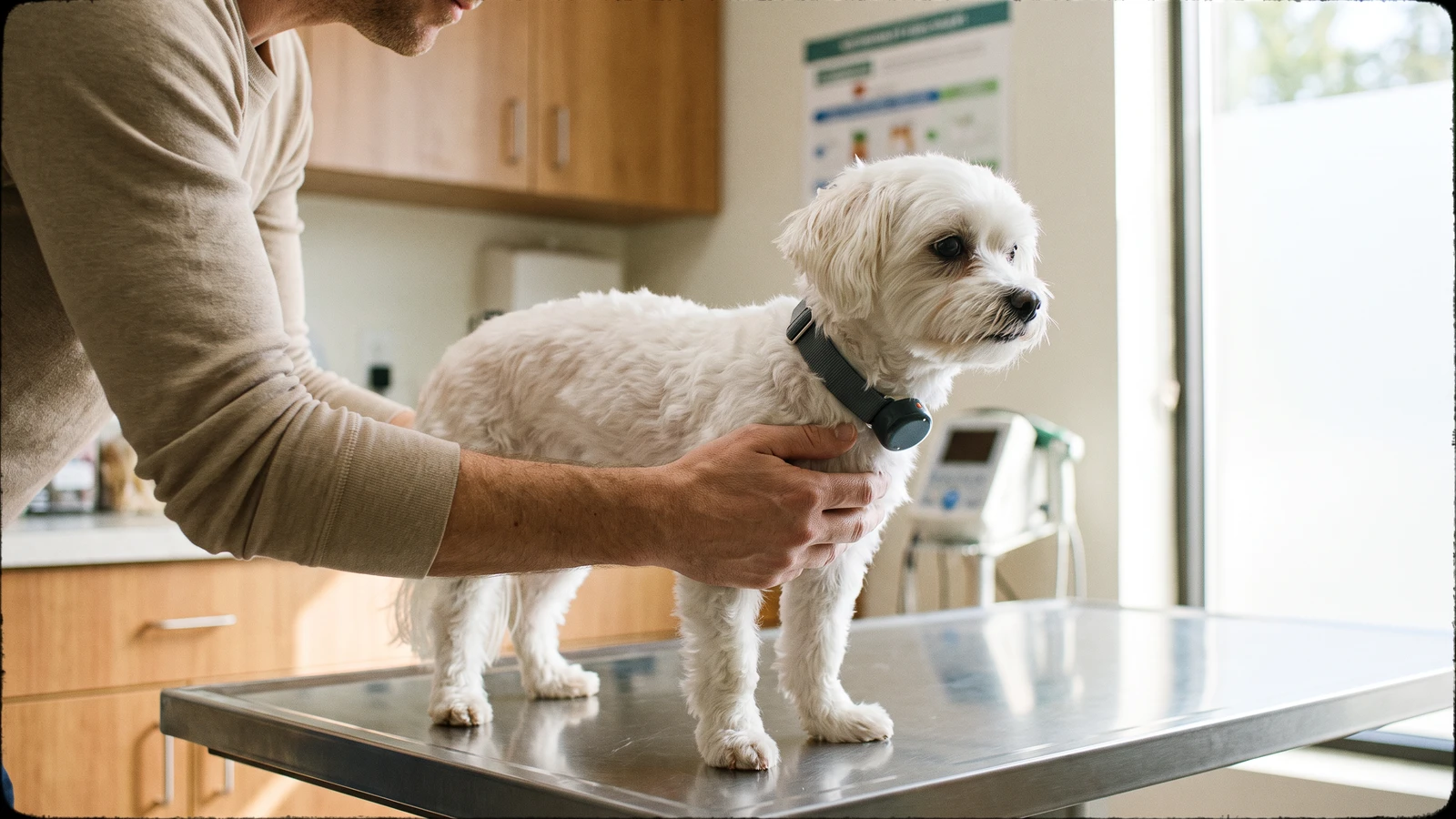
원인은 특별하지 않습니다. 차를 타고 이동하고, 낯선 냄새와 다른 동물이 있는 공간에 들어가고, 진료대 위에서 붙잡힙니다. 사람도 병원에서 혈압이 올라갑니다. 왜 여기 왔는지 설명을 들을 수 없는 반려견은 더합니다.
반응 크기는 개체마다 다릅니다
불안이 수치에 미치는 영향은 개체마다 다르고 미리 예측할 수 없습니다. ACVIM 2018 컨센서스는 어떤 동물은 혈압이 크게 오르고 어떤 동물은 거의 오르지 않는다고 적었습니다. 그래서 "우리 반려견은 겁이 많으니 병원 수치는 무시해도 된다"는 판단을 보호자가 혼자 내리기는 어렵습니다.
병원에서 수치가 얼마나 오르나
강아지 병원 스트레스 심박수를 실제로 잰 연구에서 맥박은 평균 11%, 수축기 혈압은 평균 16% 높게 나왔습니다. Bragg 등이 2015년 『Journal of the American Veterinary Medical Association』에 보고한 조사로, 건강한 반려견 30마리를 대상으로 집에서 먼저 재고 병원으로 이동한 뒤 다시 쟀습니다.
| 항목 | 집 대비 병원에서의 변화 |
|---|---|
| 맥박 | 평균 11% 상승 |
| 수축기 혈압 | 평균 16% 상승 |
| 직장 체온 | 1% 미만 상승 |
심박수만 오르는 것이 아닙니다
같은 조사에서 혈압과 체온에서도 집과 병원 사이에 유의한 차이가 나타났습니다. 체온 변화폭은 1% 미만으로 작았고, 혈압은 맥박보다 크게 움직였습니다. 진료실에서 여러 수치가 한꺼번에 높게 나오는 일이 드물지 않다는 뜻입니다.
그래서 병원 수치는 틀린 것인가
병원에서 잰 값은 그 순간의 값으로는 맞습니다. 진료대 위에서 심박수가 분당 160회였다면 그때 실제로 160회였습니다. 다만 그 값이 평소 상태를 대표하는지는 다른 문제입니다.
반대로 넘겨짚어서도 안 됩니다. 백의 효과 때문에 오른 것인지 실제 이상 때문에 오른 것인지는 진료실에서 한 번 재서 구분되지 않습니다. Bragg 등(2015)도 초진에서 활력징후 이상이 보이면 확진에 들어가기 전에 다시 재 보라고 권고했습니다.
수의사가 재측정을 권하는 이유
수의사가 다시 재자고 하는 것은 한 번의 값으로 판단하지 않는 것이 원칙이기 때문입니다. 처음 값이 잘못됐다고 본다는 뜻이 아닙니다. ACVIM 2018 컨센서스의 혈압 측정 프로토콜은 첫 측정값을 버리고, 일관되게 나온 5~7회 측정의 평균을 쓰라고 권고합니다. 값이 크게 흔들리면 그 측정을 모두 버리고 다시 하라고도 적혀 있습니다.
진료실에서 보호자가 할 수 있는 것
측정 환경을 조금만 바꿔도 조건이 달라집니다. ACVIM 2018 컨센서스가 권고하는 조건은 아래와 같습니다.
- 측정 전 5~10분 동안 그 공간에 익숙해질 시간을 준다
- 다른 동물이 없는 조용한 곳에서 잰다
- 가능하면 보호자가 옆에 있는다
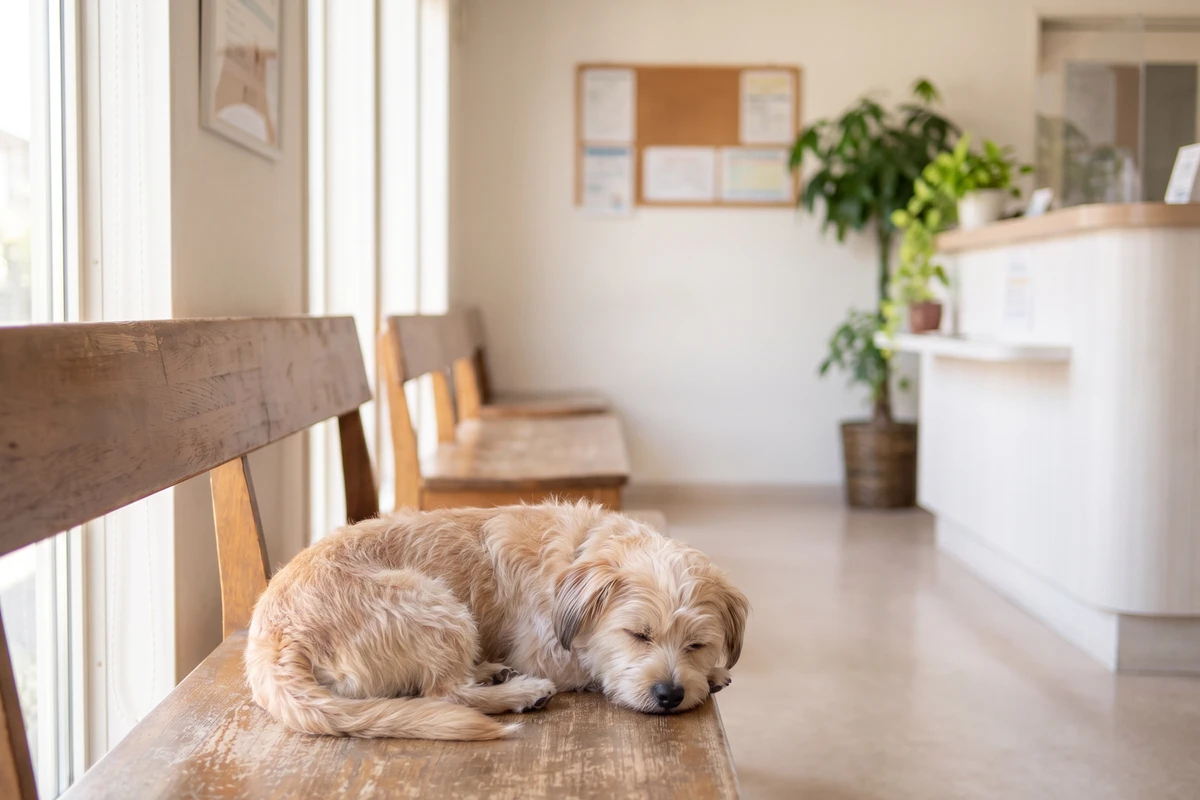
접수하자마자 진료대에 올리는 대신 대기 시간을 그 자리에서 보내면 그것이 순응 시간이 됩니다. 보호자가 옆에 있어도 되는지는 병원마다 방침이 다르므로 미리 물어보세요.
집에서 남겨 두면 좋은 기록
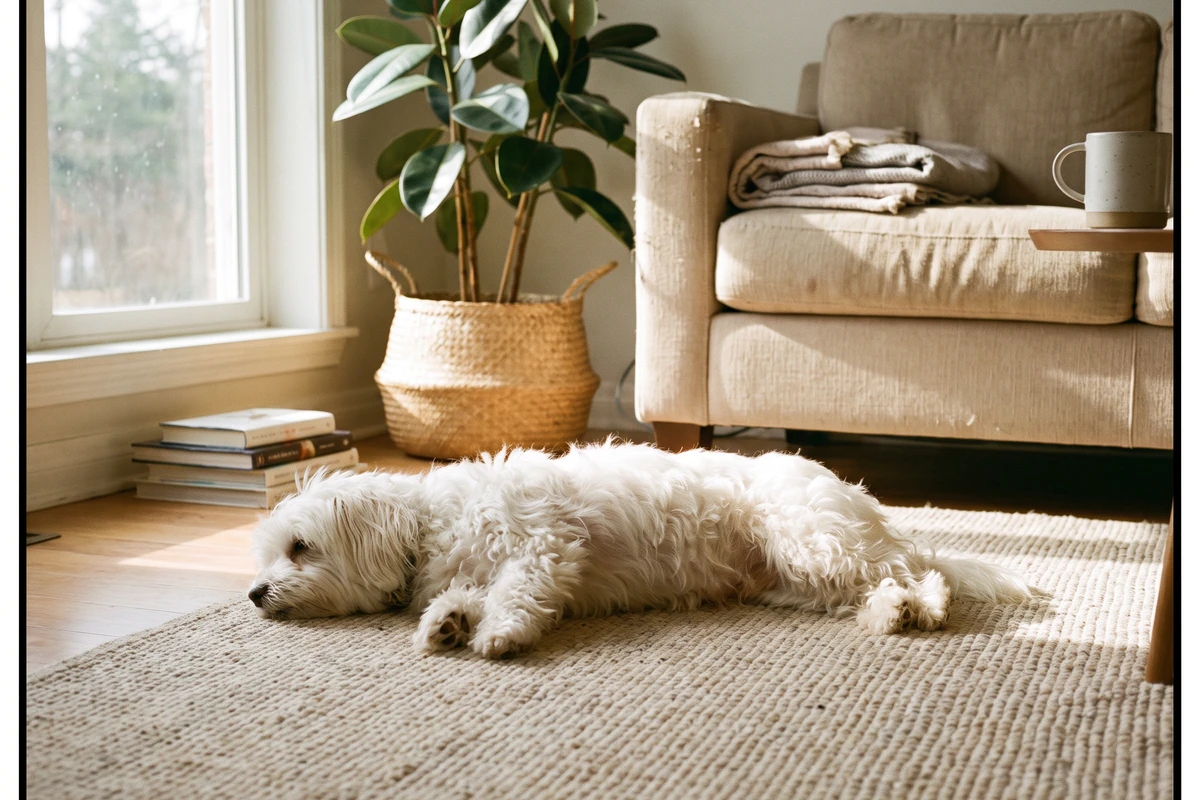
진료 전 심박수를 이야기하려면 집에서 쉬는 동안의 값 며칠치를 준비해 두면 됩니다. 병원에서 잰 한 번의 값에 비교 대상이 생깁니다.
- 최근 1~2주 동안 집에서 쉴 때의 심박수
- 같은 기간의 휴식 호흡수
- 같은 기간의 활동량
- 이동 방식과 병원 도착까지 걸린 시간
집에서 재는 값에도 오차가 있습니다. 자세와 방 온도, 방금 한 활동이 그대로 들어갑니다. 그래도 며칠치가 쌓이면 한 번의 값과 달리 범위가 보입니다. 휴식 심박수를 매일 어떻게 보는지는 강아지 휴식 심박수 보는 법에 단계별로 정리해 두었습니다.
sense 1 home 으로 집 기록을 남기는 법
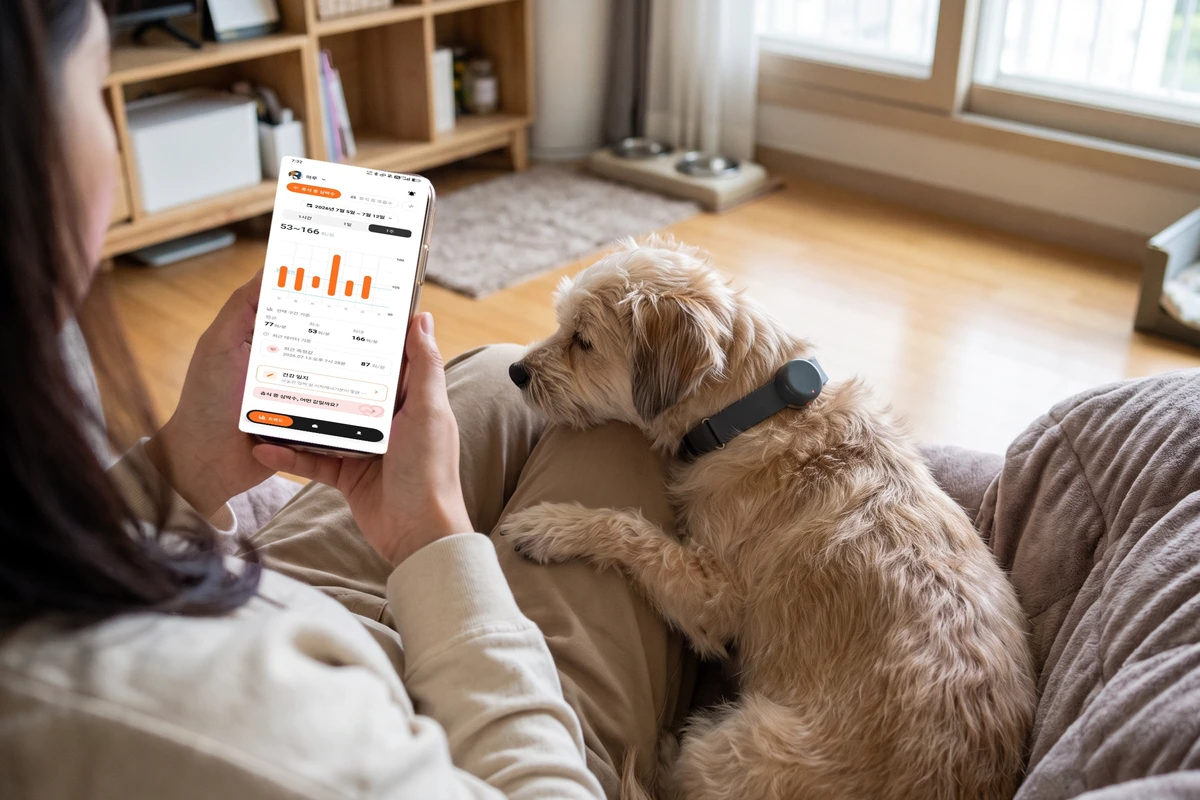
코톤 에이아이의 sense 1 home 은 반려견이 집에서 쉬는 동안의 심박수, 호흡수, HRV, 활동량을 기록합니다. 따로 재는 시간을 잡지 않아도 쉬는 구간의 값이 쌓이므로, 진료 당일 병원 수치와 같은 주의 집 평균을 나란히 놓고 볼 수 있습니다.
측정은 심탄도(BCG) 방식과 IMU 6축 센서를 함께 사용합니다. 심장이 뛸 때 몸에 전달되는 미세한 진동을 읽고, 움직임 데이터로 지금 쉬는 중인지 아닌지를 구분합니다. HRV는 심박 간격의 변동을 RMSSD 방식으로 계산하며, 부교감신경 활성과 관련된 지표로 다뤄집니다. HRV를 더 알고 싶다면 반려견 HRV(심박변이도)란?을 참고하세요.
진료 전날 앱에서 이 순서로 캡처해 두면 됩니다.
- 휴식 심박수 카드를 열고 기간을 2주로 바꿉니다.
- 그 화면을 캡처합니다.
- 같은 기간의 휴식 호흡수와 활동량 화면도 캡처합니다.
- 평소와 달라 보였던 날짜에 무슨 일이 있었는지 메모를 붙입니다.
이렇게 쌓인 기록은 평소 값이 어느 정도였는지를 그대로 보여 줍니다. 값 자체로 질병을 판단할 수는 없습니다.
이럴 때는 병원 수치를 스트레스로 넘기지 마세요
아래에 해당하면 긴장 탓으로 돌리지 말고 담당 수의사와 이야기하세요.
- 집에서 쉴 때 잰 심박수도 평소보다 높은 상태가 이어질 때
- 자는 동안의 호흡수가 분당 30회를 계속 넘을 때(건강한 성견은 대부분 분당 30회 미만입니다. Rishniw 등, 2012)
- 잇몸이 창백하거나 푸르스름할 때
- 기침, 실신, 갑작스러운 활동량 감소가 함께 나타날 때
- 재측정을 해도 병원 수치가 계속 높게 나올 때
자주 묻는 질문
강아지가 병원에 가면 왜 심박수가 올라가나요?
강아지가 병원에 가면 심박수가 올라가는 것은 이동과 낯선 환경, 보정이 한꺼번에 겹치기 때문입니다. 차를 타고, 다른 동물이 있는 공간에 들어가고, 진료대 위에서 붙잡히는 과정이 이어집니다. 이렇게 측정 과정 자체 때문에 수치가 오르는 현상을 백의 효과라고 부릅니다.
병원에서 잰 심박수를 믿어도 되나요?
병원에서 잰 심박수는 그 순간의 값으로는 정확합니다. 그 값이 평소 상태를 대표하는지는 별개입니다. 그래서 Bragg 등(2015)은 초진에서 활력징후 이상이 보이면 확진 전에 다시 재 보라고 권고했습니다.
강아지 백의 효과가 뭔가요?
강아지 백의 효과는 진료실에서 재는 과정 때문에 평소 정상이던 수치가 올라가는 현상이며, 화이트 코트 신드롬(white coat syndrome)이라고도 부릅니다. ACVIM 2018 컨센서스는 이를 situational hypertension으로 부르고, 정상 혈압인 동물에서 원내 측정 과정의 결과로 생기는 혈압 상승이라고 정의합니다. 같은 문서는 상황성 고혈압만으로 곧바로 판단하지 말고 다른 조건에서 다시 측정해 확인하도록 적었습니다. 어떤 처치가 필요한지는 담당 수의사가 다른 검사 결과와 함께 결정합니다.
집에서 잰 심박수를 수의사에게 보여줘도 되나요?
집에서 잰 심박수는 보여 주셔도 됩니다. 며칠치 그래프와 함께 어떤 조건에서 쟀는지도 같이 전하세요. 같은 기간의 휴식 호흡수와 활동량이 있으면 함께 준비하세요.
병원 다녀온 뒤 심박수는 언제 돌아오나요?
병원에 다녀온 뒤 심박수가 돌아오는 시간은 개체마다 차이가 큽니다. ACVIM 2018 컨센서스도 불안에 대한 반응이 개체마다 다르고 예측할 수 없다고 적었습니다. 평소 값으로 돌아왔는지는 며칠 동안의 기록으로 확인하세요.
진료실에서 심박수가 높게 나오면 재검사를 하나요?
진료실에서 심박수가 높게 나오면 다시 재는 경우가 많습니다. ACVIM 2018 컨센서스의 혈압 측정 프로토콜은 첫 측정값을 버리고 일관된 5~7회 측정의 평균을 쓰라고 권고합니다. 값이 크게 흔들리면 전부 버리고 다시 재라고도 적혀 있습니다.
강아지 병원 스트레스를 줄이는 방법이 있나요?
강아지 병원 스트레스를 줄이려면 측정 전에 그 공간에 익숙해질 시간을 두는 것이 먼저입니다. ACVIM 2018 컨센서스는 5~10분의 순응 시간, 다른 동물이 없는 조용한 공간, 가능하면 보호자 동석을 권고합니다. 병원마다 방침이 다르므로 접수할 때 물어보세요.
핵심 요약
- 백의 효과, 곧 화이트 코트 신드롬은 진료실에서 재는 과정 자체 때문에 수치가 올라가는 현상입니다.
- 집과 병원에서 같은 반려견을 잰 연구에서 맥박은 평균 11%, 수축기 혈압은 평균 16% 높았습니다(Bragg 등, 2015).
- 반응 크기는 개체마다 달라 미리 예측할 수 없습니다(ACVIM, 2018).
- 병원 수치는 틀린 값이 아니라 그 순간의 값이며, 한 번으로 판단하지 않는 것이 원칙입니다.
- 측정 전 5~10분 순응, 조용한 공간, 보호자 동석이 권고되는 조건입니다.
- 집에서 쉴 때의 값을 1~2주치 남겨 두면 병원 수치와 비교할 기준이 생깁니다.
마무리
강아지 병원 스트레스 심박수는 없앨 수 있는 값이 아니라 감안해야 하는 값입니다. 진료실 숫자 하나를 놓고 걱정하거나 반대로 넘겨짚기 전에, 비교할 기준을 미리 만들어 두세요.
sense 1 home 앱에서 집에서 쉴 때의 심박수 그래프를 미리 확인해 두세요. 다음 진료 때 병원 수치와 비교할 기준이 생깁니다.
본 콘텐츠는 일반 정보 제공 목적이며, 수의사의 진료를 대체하지 않습니다.
출처 / 참고자료
- Bragg RF, Bennett JS, Cummings A, Quimby JM. Evaluation of the effects of hospital visit stress on physiologic variables in dogs. Journal of the American Veterinary Medical Association. 2015;246(2):212-215. — 건강한 반려견 30마리에서 집 대비 병원 측정 시 맥박 평균 11%, 수축기 혈압 평균 16% 상승. https://avmajournals.avma.org/view/journals/javma/246/2/javma.246.2.212.xml
- Acierno MJ, Brown S, Coleman AE, Jepson RE, Papich M, Stepien RL, Syme HM. ACVIM consensus statement: Guidelines for the identification, evaluation, and management of systemic hypertension in dogs and cats. Journal of Veterinary Internal Medicine. 2018;32(6):1803-1822. — situational hypertension 정의, 개체별 반응 차이, 측정 프로토콜(5~10분 순응, 조용한 공간, 보호자 동석, 첫 측정값 폐기 후 5~7회 평균). https://pmc.ncbi.nlm.nih.gov/articles/PMC6271319/
- Rishniw M, Ljungvall I, Porciello F, Häggström J, Ohad DG. Sleeping respiratory rates in apparently healthy adult dogs. Research in Veterinary Science. 2012;93(2):965-969. — 건강한 성견의 수면 중 호흡수는 평균 약 15회/분, 거의 모든 개체가 분당 30회 미만. https://pubmed.ncbi.nlm.nih.gov/22178275/