강아지 휴식 심박수 보는 법, 매일 3분 루틴
앱에 심박수 숫자는 매일 뜨는데 그게 높은 건지 낮은 건지 모르겠다는 보호자가 많습니다. 검색하면 "정상 범위는 몇 회"라는 표가 나오지만, 내 반려견 그래프를 어떻게 읽으라는 말은 없습니다. 강아지 휴식 심박수 보는 법을 평소 값 정하기, 하루 그래프 읽기, 2주 추세 보기, 병원에 전달하기 4단계로 정리했습니다. 아래는 일반적인 관찰 방법이며, 개별 반려견의 상태에 대한 판단은 담당 수의사의 진료를 통해 이루어져야 합니다.

한눈에 보기
- 휴식 심박수는 반려견이 움직이지 않고 쉬거나 잠든 동안 측정한 분당 심박수입니다.
- 중형견과 대형견의 안정 시 심박수는 분당 60~100회, 소형견은 분당 100~140회가 흔히 제시되는 범위입니다(American Red Cross, Pet First Aid).
- 체구가 클수록 심박수가 느린 경향이 있어, 견종을 무시한 하나의 숫자로 판단하기 어렵습니다(MSD Veterinary Manual).
- 하루치 숫자 하나보다 최소 14일치 평균과 그 흐름의 방향이 더 쓸모 있습니다.
- 심박수 하나만 보지 말고 휴식 호흡수, 활동량을 같이 놓고 봅니다.
휴식 심박수란 무엇이고 왜 매일 보는가
휴식 심박수란 반려견이 깨어 있어도 움직이지 않거나 잠들어 있는 동안 측정한 분당 심박수를 말합니다. 산책 중이거나 손님이 왔을 때의 심박수는 상황에 따라 크게 오르내려서 날짜끼리 비교가 안 됩니다. 조건이 비슷할 때 잰 값만 모아야 어제와 오늘을 나란히 놓을 수 있습니다.
반려견 심박수 매일 확인이 필요한 이유는 이상을 잡아내려는 것이 아니라 평소를 알아 두려는 것입니다. 평소 값을 모르면 어느 날 뜬 숫자가 그 반려견에게 높은 값인지 원래 그런 값인지 구분이 안 됩니다.
정상 범위는 체구와 나이에 따라 다릅니다
안정 시 심박수의 정상 범위는 체구에 따라 달라집니다. 미국 적십자사(American Red Cross)의 반려동물 응급처치 자료는 중형견과 대형견을 분당 60~100회, 소형견을 분당 100~140회로 안내합니다. MSD Veterinary Manual은 쉬고 있는 반려견의 동방결절이 분당 약 60~120회로 발화하며, 체구가 큰 반려견일수록 심박수가 느린 경향이 있다고 설명합니다.
3kg 몰티즈의 분당 130회와 30kg 리트리버의 분당 130회는 같은 뜻이 아닙니다. 정상 범위 자체가 더 궁금하다면 강아지 휴식 중 심박수란? 정상 범위와 중요성에 정리해 두었습니다.
1단계. 우리 반려견의 평소 값 정하기
평소 값(baseline)은 최소 14일치 반려견 휴식 심박수 기록의 평균으로 잡습니다. 하루 이틀 값은 그날 날씨나 손님, 병원 방문 같은 일에 그대로 흔들립니다. 2주치를 모으면 그런 날들이 섞이면서 그 반려견의 보통 수준이 드러납니다.
평소 값을 정할 때는 아픈 기간이나 수술 회복기, 이사 직후는 빼고 잡습니다. 그 시기 값이 섞이면 기준선 자체가 올라가서 나중에 진짜 변화가 생겨도 눈에 띄지 않습니다.
왜 하루 값이 아니라 2주인가
하루 값 하나는 측정 시간대에 따라 크게 달라지기 때문입니다. 아침에 막 깬 직후와 밤에 깊이 잠든 시간의 심박수는 같은 반려견에서도 차이가 납니다. 14일치를 모으면 시간대 편차가 평균에 흡수됩니다.
2단계. 하루 그래프 읽는 순서
강아지 심박수 그래프 해석은 잠든 시간대의 최저값, 하루 평균, 튀어 오른 구간 순서로 합니다. 30초면 다 훑습니다.
- 밤에 가장 낮게 내려간 값이 평소와 비슷한지 봅니다.
- 하루 평균을 평소 값과 비교합니다. 몇 회 차이인지 외우지 말고 그래프의 위아래만 봅니다.
- 튀어 오른 구간이 있으면 그 시각에 무슨 일이 있었는지 떠올려 봅니다. 산책이나 초인종, 더운 방이면 설명이 됩니다.
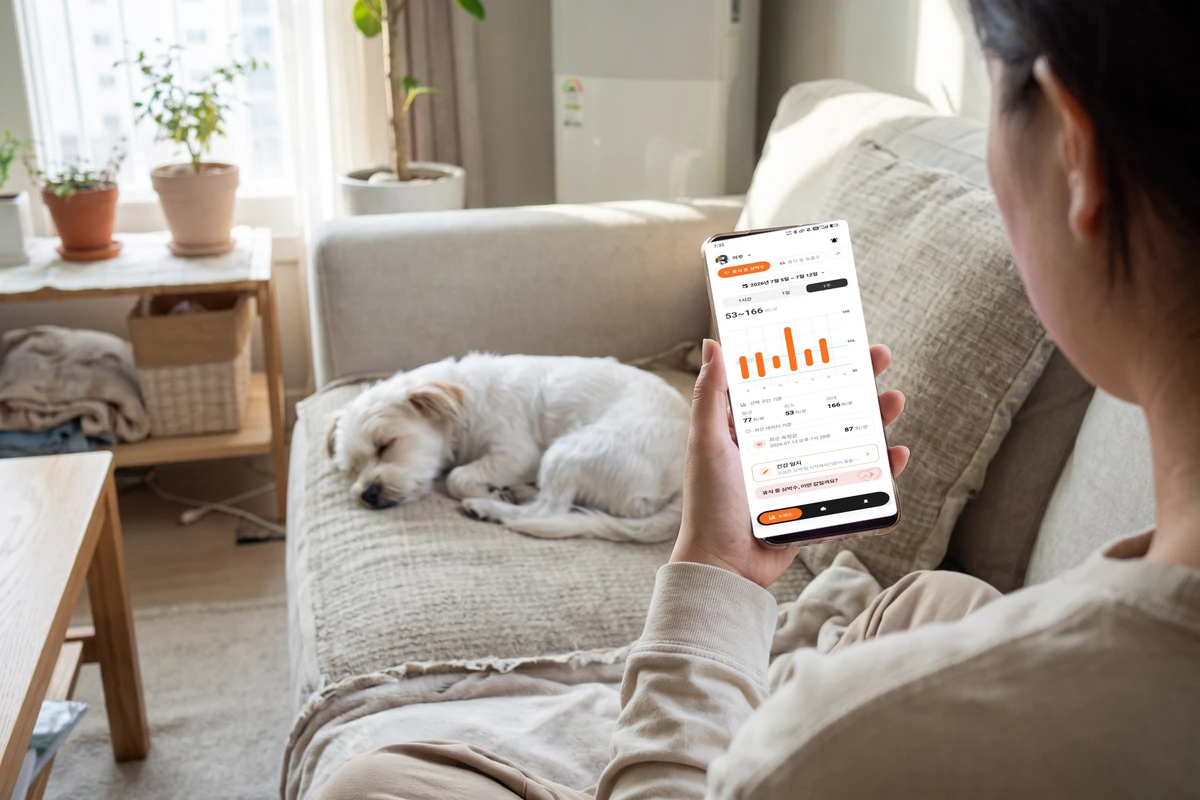
값이 들쭉날쭉해 보이는 이유
휴식 중 심박수가 일정하지 않은 것은 대부분 정상입니다. 편안히 쉬는 반려견에서는 숨을 들이쉴 때 심박이 빨라지고 내쉴 때 느려지는 호흡성 동성 부정맥이 흔히 나타나며, MSD Veterinary Manual은 이를 반려견에서 정상 소견으로 다룹니다. 여기에 자세 변화와 착용 위치, 얕은 잠이 겹치면 그래프가 톱니 모양이 됩니다. 그래서 점 하나가 아니라 띠가 어디에 놓였는지를 봅니다.
3단계. 2주 추세로 변화 알아차리기
강아지 심박수 추세 변화는 하루치가 아니라 7~14일 이동 평균이 어느 쪽으로 향하는지로 봅니다. 어제 하루 20회 올랐다가 오늘 돌아왔다면 대개 그날 있었던 일 때문입니다. 열흘에 걸쳐 조금씩 올라가 평소 띠의 위쪽에 계속 머무른다면 그 흐름은 적어 둘 만합니다.
이 글에서는 평소 평균보다 눈에 띄게 높은 상태가 3일 이상 이어지면 기록을 들고 동물병원에 연락하라고 권합니다. 3일이라는 숫자는 의학 기준이 아니라 보호자가 판단을 미루지 않게 하려고 정한 선입니다.
심박수와 호흡수를 같이 봐야 하는 이유
심박수 단독 변화보다 호흡수가 함께 변할 때 알아차릴 수 있는 것이 많습니다. Rishniw 등이 2012년 『Research in Veterinary Science』에 보고한 조사에서 건강한 성견의 수면 중 호흡수는 평균 약 15회/분이었고 거의 모든 개체가 분당 30회 미만이었습니다. 미국수의내과학회(ACVIM)의 2019년 승모판 질환 컨센서스 가이드라인도 가정에서 측정하는 수면·휴식 호흡수를 상태를 지켜보는 항목으로 다룹니다(Keene 등, 2019). 심박수 그래프 옆에 호흡수 그래프를 나란히 놓고 보세요. 호흡수 기준은 강아지 호흡수 정상 범위에 정리되어 있습니다.
4단계. 병원에 기록을 전달하는 방법
진료 전에 2주 그래프 화면을 캡처하고, 이상해 보인 날짜와 그날의 상황을 메모해 갑니다. 말로만 설명하는 대신 기록해 둔 그래프를 함께 보여 주면 그동안의 값이 어땠는지 그대로 전달됩니다.
- 지난 2주 휴식 심박수 그래프 캡처
- 평소 값과 최근 값의 차이가 보이는 구간
- 같은 기간의 휴식 호흡수와 활동량
- 값이 변한 날 있었던 일(사료 변경, 약 복용 시작, 이사, 더위)

센스1홈으로 이 4단계를 확인하는 법
코톤 에이아이의 센스1홈은 반려견이 쉬는 동안의 심박수, 호흡수, HRV, 활동량을 기록합니다. 보호자가 언제 재느냐에 따라 값이 달라지는 문제를 줄이려고 반려견이 실제로 쉬고 있는 구간을 골라 기록합니다.
측정은 심탄도(BCG) 방식과 IMU 6축 센서를 함께 사용합니다. 심장이 뛸 때 몸에 전달되는 미세한 진동을 읽고, 움직임 데이터로 지금 쉬는 중인지 아닌지를 가릅니다. HRV는 심박 간격의 변동을 RMSSD 방식으로 계산하며, 부교감신경 활성과 관련된 지표로 다뤄집니다(Task Force of the ESC/NASPE, 1996). HRV를 더 알고 싶다면 반려견 HRV(심박변이도)란?을 참고하세요.
강아지 휴식 심박수 보는 법을 앱에서는 이 순서로 적용합니다.
- 홈 화면에서 휴식 심박수 카드를 엽니다.
- 기간을 2주로 바꿔 평소 범위를 확인합니다.
- 오늘 값이 그 범위 안인지 봅니다.
- 벗어나 있으면 같은 기간의 호흡수와 활동량 카드를 이어서 봅니다.
이렇게 쌓인 기록은 평소와 다른 변화를 보호자가 더 빨리 알아차리는 데 도움을 줍니다. 값 자체로 질병을 판단할 수는 없습니다.
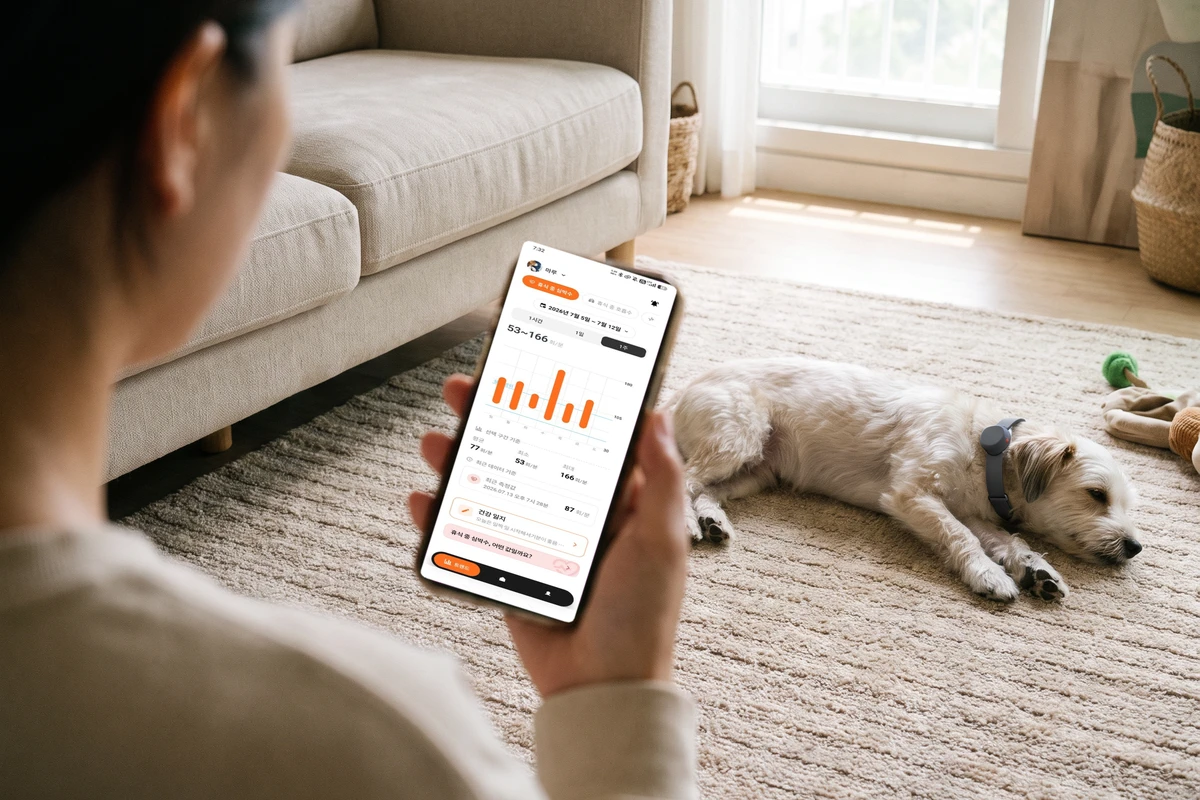
이럴 때는 수의사와 상담하세요
아래에 해당하면 그래프 해석을 미루고 동물병원에 연락합니다.
- 평소보다 높은 휴식 심박수가 3일 이상 이어질 때
- 휴식 호흡수가 분당 30회를 계속 넘을 때
- 잇몸이 창백하거나 푸르스름할 때
- 기운이 없고 산책을 거부하거나 밤에 눕지 못하고 안절부절못할 때
- 기침, 실신, 갑작스러운 활동량 감소가 함께 나타날 때
자주 묻는 질문
강아지 휴식 심박수는 매일 확인해야 하나요?
강아지 휴식 심박수는 매일 확인하되 매일 반응할 필요는 없습니다. 매일 보는 목적은 평소 값을 눈에 익히는 것입니다. 하루 값이 조금 오르내리는 것은 흔한 일이고, 반응해야 하는 것은 며칠 이어지는 흐름입니다.
강아지 심박수 그래프가 갑자기 올라갔어요. 병원에 가야 하나요?
강아지 심박수 그래프가 갑자기 올라갔다면 먼저 그 시각 전후에 무슨 일이 있었는지 확인합니다. 산책, 손님, 더운 방, 흥분은 흔한 원인입니다. 다음 날 평소 범위로 돌아오면 지켜보고, 3일 이상 높은 상태가 이어지면 기록을 들고 동물병원에 연락합니다.
반려견 심박수 평균값은 며칠치를 봐야 하나요?
반려견 심박수 평균값은 최소 14일치를 봅니다. 하루 값은 측정 시간대와 그날 있었던 일에 크게 흔들립니다. 2주치를 모으면 그런 편차가 평균에 흡수되어 그 반려견의 보통 수준이 드러납니다.
강아지 심박수 측정값이 들쭉날쭉한 이유는 뭔가요?
강아지 심박수 측정값이 들쭉날쭉한 것은 대부분 정상 범위 안의 변동입니다. 편안히 쉬는 반려견에서는 호흡에 맞춰 심박이 빨라졌다 느려지는 호흡성 동성 부정맥이 흔합니다(MSD Veterinary Manual). 여기에 자세 변화와 착용 위치가 더해집니다. 점 하나가 아니라 며칠간의 띠를 보세요.
노령견의 휴식 심박수 변화는 어디까지가 정상인가요?
노령견의 휴식 심박수는 개체 차가 커서 하나의 기준으로 말하기 어렵습니다. 나이가 들수록 표에 적힌 범위보다 그 반려견 자신의 평소 값과 비교한 변화를 봅니다. 평소와 달라진 상태가 이어지면 수의사와 상담하세요.
강아지 심박수 기록을 병원에 어떻게 보여주나요?
강아지 심박수 기록은 2주 그래프를 캡처해서 보여 주는 것이 가장 빠릅니다. 이상이 보인 날짜와 그날 있었던 일을 메모로 붙입니다. 같은 기간의 휴식 호흡수와 활동량 화면도 같이 준비하세요.
강아지 심박수와 호흡수를 같이 봐야 하나요?
강아지 심박수와 호흡수는 같이 보는 편이 낫습니다. 두 값이 함께 평소보다 올라가 있을 때가 심박수만 오른 때보다 눈여겨볼 값어치가 큽니다. 활동량까지 나란히 놓으면 그날 상태를 훨씬 구체적으로 설명할 수 있습니다.
핵심 요약
- 강아지 휴식 심박수 보는 법은 평소 값 정하기, 하루 그래프 읽기, 2주 추세 보기, 병원에 전달하기 4단계입니다.
- 휴식 심박수는 반려견이 쉬거나 잠든 동안 측정한 분당 심박수입니다.
- 중형·대형견은 분당 60~100회, 소형견은 분당 100~140회가 흔히 제시되는 안정 시 범위입니다(American Red Cross).
- 평소 값은 최소 14일치 평균으로 잡고, 아픈 기간은 뺍니다.
- 하루 그래프는 잠든 시간대 최저값, 하루 평균, 튄 구간 순서로 봅니다.
- 평소보다 높은 상태가 3일 이상 이어지면 기록을 들고 동물병원에 연락합니다.
마무리
강아지 휴식 심박수 보는 법은 숫자를 외우는 일이 아니라 우리 반려견의 평소를 아는 일입니다. 표에 적힌 정상 범위는 출발점이고, 실제로 쓸 기준은 2주치 기록에서 나옵니다.
센스1홈 앱에서 우리 반려견의 지난 2주 휴식 심박수 그래프를 먼저 확인해 보세요. 평소 범위를 알아 두면 오늘 숫자가 어떤 의미인지 훨씬 빨리 판단할 수 있습니다.
본 콘텐츠는 일반 정보 제공 목적이며, 수의사의 진료를 대체하지 않습니다.
출처 / 참고자료
- American Red Cross, "Normal Temperature, Heart and Breathing Rate for Dogs" (Pet First Aid) — 체구별 안정 시 심박수(중·대형견 60~100회/분, 소형견 100~140회/분). https://www.redcross.org/take-a-class/resources/learn-pet-first-aid/dog/normal-temperature-heart-breathing-rate
- MSD Veterinary Manual(Merck Veterinary Manual), "Introduction to Heart and Blood Vessel Disorders in Dogs" — 안정 시 동방결절 분당 60~120회 발화, 체구가 클수록 심박수가 느려짐. https://www.merckvetmanual.com/dog-owners/heart-and-blood-vessel-disorders-of-dogs/introduction-to-heart-and-blood-vessel-disorders-in-dogs
- MSD Veterinary Manual(Merck Veterinary Manual), "Heart Disease: Conduction Abnormalities in Dogs and Cats" — 편안히 쉬는 반려견에서 호흡성 동성 부정맥은 정상 소견. https://www.merckvetmanual.com/circulatory-system/heart-disease-conduction-abnormalities-in-dogs-and-cats/heart-disease-conduction-abnormalities-in-dogs-and-cats
- Rishniw M, Ljungvall I, Porciello F, Häggström J, Ohad DG. Sleeping respiratory rates in apparently healthy adult dogs. Research in Veterinary Science. 2012;93(2):965-969. https://pubmed.ncbi.nlm.nih.gov/22178275/
- Keene BW, Atkins CE, Bonagura JD, et al. ACVIM consensus guidelines for the diagnosis and treatment of myxomatous mitral valve disease in dogs. Journal of Veterinary Internal Medicine. 2019;33(3):1127-1140. https://onlinelibrary.wiley.com/doi/10.1111/jvim.15488
- Task Force of the European Society of Cardiology and the North American Society of Pacing and Electrophysiology. Heart rate variability: Standards of measurement, physiological interpretation, and clinical use. Circulation. 1996;93(5):1043-1065. https://pubmed.ncbi.nlm.nih.gov/8598068/