A Dog's Normal Respiratory Rate and Signs for Owners to Watch
If you've ever watched your dog sleep and thought, "Isn't its breathing too fast?", you've probably wondered about the normal respiratory rate for dogs. Resting respiratory rate is one of the easiest health signals an owner can observe at home. This article covers how many breaths per minute is typical, how to look at it when it differs from normal, and how to measure it.
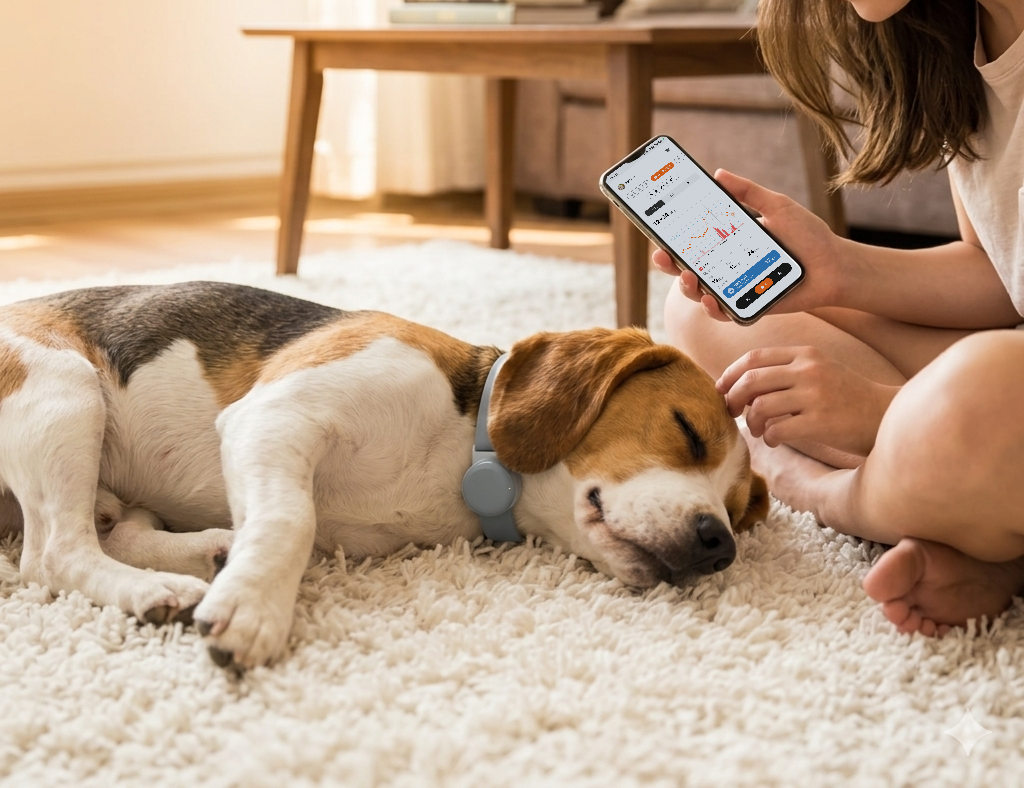
A dog's normal resting respiratory rate is 10-30 breaths per minute
The most widely cited normal respiratory rate for dogs is 10-30 breaths per minute while resting or asleep. This is a reference measured in a calm state with no activity; right after excitement or exercise it can temporarily rise higher.
General benchmarks for breaths per minute
- At rest: about 10-30 breaths/min
- Right after exercise or when excited: may temporarily exceed 30 breaths/min
- In hot environments: may pant rapidly with the mouth open
Differences by breed and weight
Small dogs generally tend to breathe slightly faster than large dogs. There's individual variation even within the same breed, so knowing your own dog's usual range matters more than the exact "breaths per minute."
A dog's respiratory rate changes with age
Even for the same dog, the usual breathing pattern can change with age.
| Age group | Tendency at rest | What owners should check |
|---|---|---|
| Puppies (young dogs) | Slightly faster than adults | Settles naturally as activity levels develop |
| Adult dogs (1-6 yrs) | Stable within 10-30 breaths/min | Knowing the usual range in advance helps comparison |
| Senior dogs (7+ yrs) | May be slightly faster or more variable | The more baseline data, the faster you spot a change |
The table shows general tendencies; there is variation by breed, weight, and living environment.
How to measure your dog's respiratory rate at home
You can measure it yourself without any special tools.
Timing (during rest or sleep)
Because the rate temporarily rises right after exercise, when excited, or in a hot environment, you should measure when your dog is calmly resting or asleep to get a meaningful number.
Count chest movements for one minute
Watching quietly from the side, count one full cycle of your dog's chest rising and falling as one breath. Set a 60-second timer on your phone and record the count over that period.
A tip for consistent records
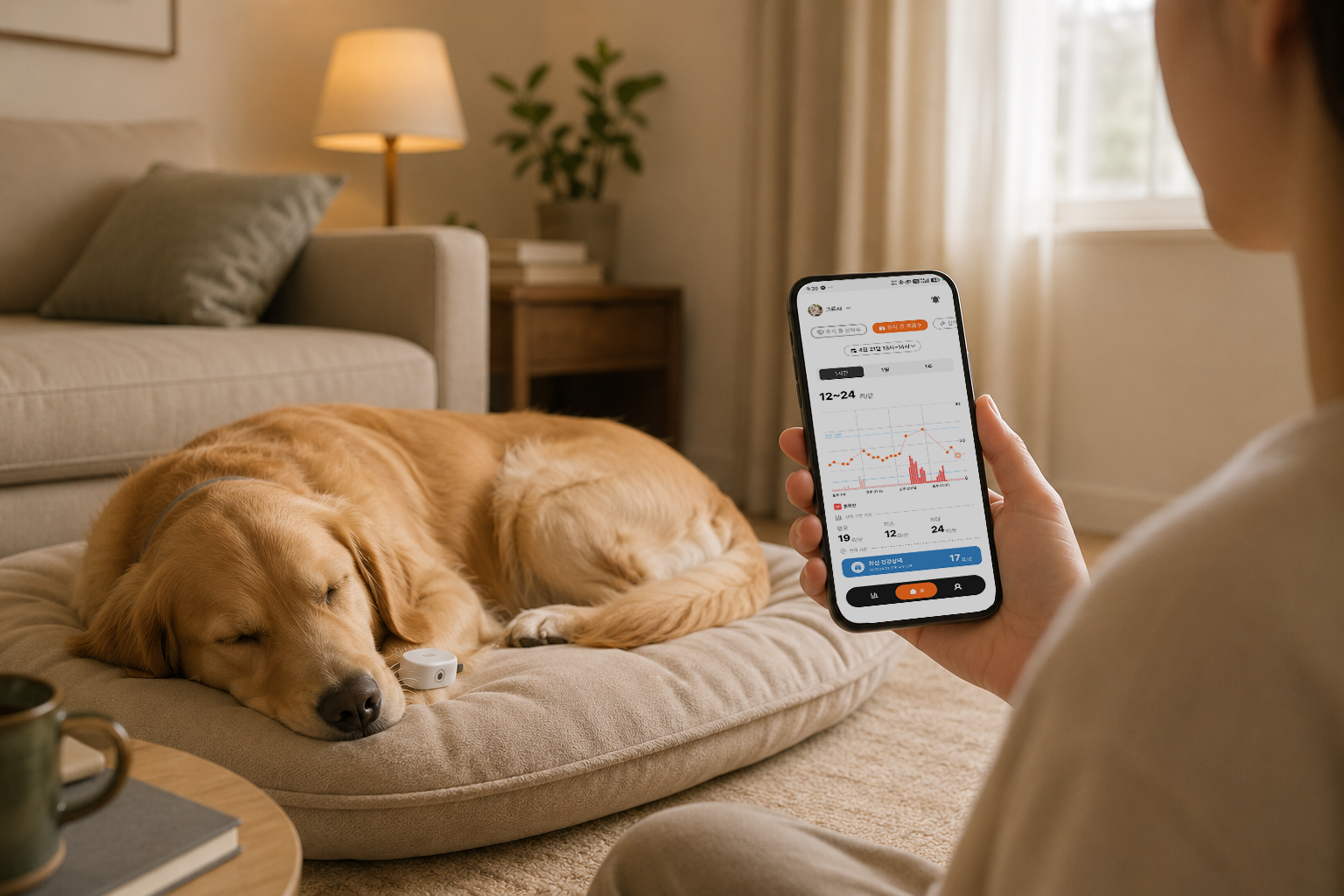
Measuring just once gives no basis for comparison, so it means little. If you can, record at the same time of day (e.g., before sleep, after waking) for about a week to build your dog's usual range. If measuring manually every day is hard, a wearable like cotons ai's sense 1 home can automatically record resting respiratory rate, helping you quickly see changes from the usual pattern.
Warning signs when breathing is faster than usual
A temporary rise in breaths per minute is common. But if a pattern that strays far from the usual range continues even while at rest, it's worth looking into.
Temporary causes (usually natural)
- 5-15 minutes right after a walk or play
- Panting to regulate body temperature in a hot environment
- Right after a guest arrives or after excitement
Patterns that need attention
- Consistently faster than usual even during rest or sleep
- A trend of gradually speeding up over several days
- Breathing that sounds shallow or broken, or repeatedly changing position
If you see these signs, we recommend a veterinary consultation along with your everyday records.
Frequently asked questions
How many breaths per minute is normal for a dog?
A range of about 10-30 breaths per minute at rest is typical. Since there's variation by breed, weight, and age, knowing your dog's usual range helps more than a single number.
Why is my sleeping dog's breathing fast?
During the dreaming stage of deep sleep, breathing can temporarily speed up. It's often seen together with leg twitches or small noises. If it's much faster than usual even during waking rest, it's worth looking into.
What should I do if my senior dog's breathing keeps getting faster?
If there's a trend of gradually straying from the usual range over several days, we recommend a veterinary consultation along with your records. In senior dogs small changes can accumulate, so the more baseline data you have, the sooner you can notice a change.
Is there a specific way to measure a dog's respiratory rate?
The most common method is to count one rise and fall of the chest as one breath during rest or sleep, and count how many occur over 60 seconds.
Is fast breathing right after exercise normal?
A temporary rise right after exercise, in a hot environment, or when excited is typical. What matters is checking whether it returns to the usual range over time.
Key takeaways
- A dog's normal respiratory rate is typically 10-30 breaths per minute at rest
- Because there's variation by breed, weight, and age, knowing your dog's usual range is key
- Measure by counting chest movements for one minute during rest or sleep
- If it consistently strays far from normal even at rest, a veterinary consultation along with your records is recommended
Closing
When you know your dog's usual breathing data, you can notice even small changes sooner. With cotons ai sense 1 home, keep a steady record of resting respiratory data and build your dog's own usual range.
This content is for general informational purposes only and does not replace veterinary care.