Caring for a Dog With Heart Disease: 7 Things to Do at Home
The moment a vet mentions a heart murmur, or hands you a heart disease diagnosis, your part of the work begins. The appointment usually ends with something like "give the medication and don't let them overdo it." Once you are home, you have no idea whether a walk is still allowed or whether the food needs to change. This article is not about spotting symptoms or finding causes. It covers what to do at home for a dog who has already been diagnosed. If you want the symptoms, causes and early signs, start with 5 early signs of heart disease in dogs. Everything below is a general principle, and your own vet's instructions always come first for your dog.
Key takeaways
- Healthy adult dogs averaged about 15 breaths per minute while asleep in research, and most stayed under 30 breaths per minute (Rishniw et al., 2012). Your dog's own reference point is set by your vet.
- As heart disease progresses, muscle over the back and hind legs can shrink while body weight stays the same, so the scale alone will not show it.
- Sodium is adjusted according to the stage of disease rather than cut as far as possible, and treats matter more than the main food.
- Walks are not stopped but eased, and you stop on the spot if panting starts earlier than usual.
- Pale or bluish gums, a collapse, or a dog who cannot settle and will not lie down all mean emergency care that night.
1. Count breaths while your dog sleeps: healthy adult dogs mostly stay under 30 per minute
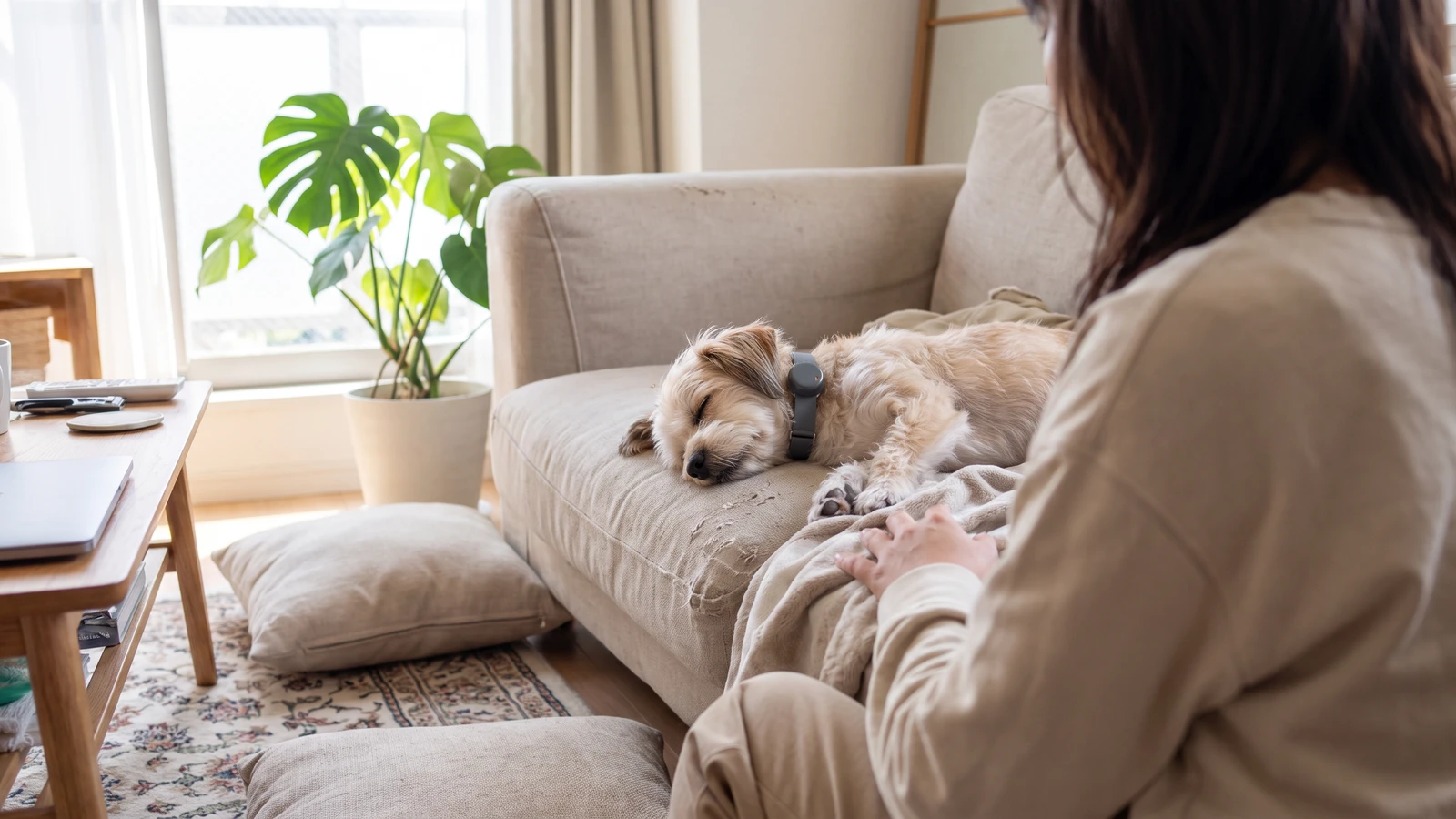
When you are caring for a dog with heart disease, the value that veterinary literature most often mentions as easy for an owner to record repeatedly is the sleeping respiratory rate. In a survey Rishniw and colleagues published in Research in Veterinary Science in 2012, healthy adult dogs averaged about 15 breaths per minute during sleep, and almost every dog stayed under 30 per minute. Dogs with medically controlled left-sided heart failure have also been reported to keep home-measured sleeping respiratory rates generally under 30 breaths per minute (Porciello et al., The Veterinary Journal, 2016).
The ACVIM consensus guidelines on myxomatous mitral valve disease, published in 2019, likewise treat owner-measured sleeping and resting respiratory rate at home as one of the things to keep an eye on (Keene et al., Journal of Veterinary Internal Medicine, 2019).
Why count during sleep instead of while awake
A waking respiratory rate swings widely with body temperature, excitement and whatever the dog just did. Count during the day and you cannot tell heat or happiness apart from breathing that has genuinely sped up. In deep sleep most of those variables drop out, which lets you compare the same conditions across days and weeks.
How to count, and the mistake almost everyone makes
One rise and fall of the chest is one breath, and you count for a full 60 seconds. Counting for 15 seconds and multiplying by four works for a human pulse but not for a sleeping dog. The gaps between breaths are uneven during sleep, so a short count multiplies its own error by four.
- Do not count while your dog is snoring or twitching through a dream.
- Skip the window right after a meal or a walk, and wait until your dog has been asleep for a while.
- Count at roughly the same time each day so the conditions match.
- Write the number down instead of trying to remember it. Almost nobody recalls the number from three days ago correctly.
What to do if the number climbs above what is usual
If the count runs over 30 per minute for several days in a row, or rises noticeably above what you have been recording for your own dog, do not try to work out the cause yourself. Take the record and call your vet. A few days of trend tells you more than any single night's number. If you want the normal ranges themselves, normal respiratory rates in dogs breaks them down by age and situation.
2. Watch the muscle, not the weight
As heart disease progresses, muscle over the back and hind legs can shrink even when body weight holds steady. This kind of muscle loss that accompanies chronic heart failure is called cardiac cachexia. Unlike ordinary weight loss, muscle goes before fat, and this muscle loss has been reported as something to assess alongside a dog's overall condition (Freeman, Journal of Veterinary Internal Medicine, 2012). What it means for your particular dog is confirmed through an examination.
So the number on the scale can hide the change. Muscle can shrink while fat or retained fluid keeps the reading looking the same.
Here is what to check at home.
| What | How | How often |
|---|---|---|
| Body weight | Same scale, same day of the week, same time of day | Weekly |
| Muscle | Feel along both sides of the spine, the shoulders and the thighs | Weekly |
| Photos | Same spot, side view and rear view | Monthly |
If the spine feels more prominent than it used to, or the hind legs feel thinner, that is worth raising at the next appointment even when the weight has not moved.
3. Adjust sodium rather than cutting it: the culprit is treats, not the food
A heart disease diagnosis does not mean sodium should be cut as far as it will go. The ACVIM 2019 consensus treats sodium levels as something that varies with the stage of disease, and it does not recommend severe restriction in the early stage before signs appear (Keene et al., 2019). Cutting too hard can dull the appetite and speed up the muscle loss described above.
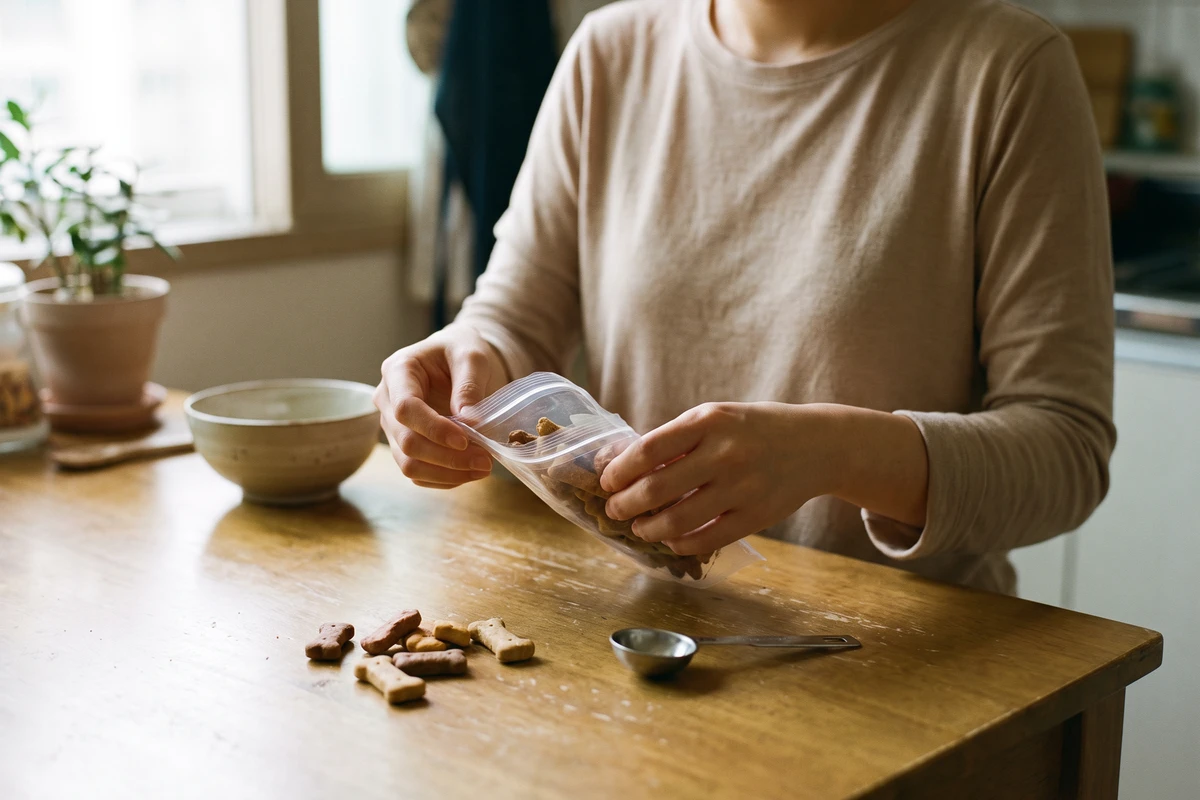
Many owners reach for a different bag of food first, but what usually drives daily sodium intake is the treats. The main food is already made to a set standard. The problem is everything stacked on top of it.
Start by going through this list at home.
- Jerky, dried strips and other dehydrated treats
- Cheese, ham, sausage and processed fish products
- Table scraps, broths and salty snacks such as seaweed
- Some dental chews and long-lasting chew treats
- The treat you wrap the medication in, which adds up fastest because it is daily
How far to restrict, and whether to change food at all, depends on your dog's stage, weight and kidney status, so your vet sets it. That is why this article gives no milligram targets.
4. Ease the walk instead of ending it
A heart disease diagnosis is not an instruction to stop walking. Stopping activity entirely speeds up the muscle loss described above and makes weight harder to manage. You change the pace and the conditions, not the route.
- Walk the same route more slowly. Whether to reduce speed or distance first depends on your dog's condition, so set the range with your vet.
- Cut out hills and stairs.
- Avoid the hottest part of the day and humid weather, and move the walk to early morning or after sunset.
- A harness that does not press on the throat is often recommended. Which collar or harness suits your dog depends on their condition, so check with your vet.
- Carry water and pick your rest stops before you set out.
Stop and let your dog rest on the spot if any of the following shows up during a walk: panting that starts earlier than usual, a gait that keeps stalling, or a tongue or gums that look darker than normal. Activity that drops off with age looks much like activity that drops off because of the heart, so activity decline in senior dogs is worth reading alongside this for telling them apart.
Do not judge by feel whether your dog overdid it. Note the distance, the time and how many rest stops you took, and you have something concrete to adjust against.
5. Fix the medication time and keep a record
Heart medication usually comes with instructions to give it at a similar time each day, on the interval you were prescribed. The exact time and interval follow the prescription and your vet's instructions. Some medications come with different guidance about timing relative to meals. The type, the dose and the timing follow your vet's instructions, and you should never change or stop them on your own.
Three things are worth writing down at home.
- The time given. Set two phone reminders, morning and evening.
- Missed doses. Note when it happened and how many doses were skipped.
- Vomiting after a dose. Note the time and the state of things, and pass it on at the next appointment.
6. Sort emergency signs from watch-and-wait signs in advance
When you are caring for a dog with heart disease, the decision about whether to go to a clinic in the middle of the night has to be made ahead of time. Trying to work out the threshold at two in the morning slows everything down.
| Go in immediately | Mention at the next visit |
|---|---|
| Gums or tongue look pale or bluish | Coughing gradually becoming more frequent. If it spikes over a day or two or worsens at night, call right away |
| A sudden collapse or loss of consciousness | Walks getting shorter |
| Cannot settle, will not lie down, sits upright and restless | Appetite going up or down |
| Reluctance to lie down, or sleeping with the neck stretched out, so that sleeping posture changes | Changes in how much water they drink |
| Sleeping respiratory rate climbing sharply | |
| A cough or discharge with pink froth in it |
A few things are worth setting up now. Put the phone number and route for the nearest after-hours emergency clinic somewhere visible, on the fridge or by the door. Keep the carrier somewhere you can reach quickly. Save a note of the medication names and doses in your wallet or on your phone. If you end up at an unfamiliar clinic, that information is where the visit starts.
7. Keep the daily numbers as a trend: recording with Sense 1 Home
Of everything covered so far, respiratory rate, heart rate and activity level mean more as a trend across days than as a single day's number. It matters less that yesterday was 28 and today is 31, and more that last week averaged 22 while this week averages 29.
Counting by hand has limits. Your dog has to be asleep at the same time each day, and if they wake during the 60 seconds you throw that day out. A late night at work or a trip away leaves a blank. Enough blanks and the trend disappears.
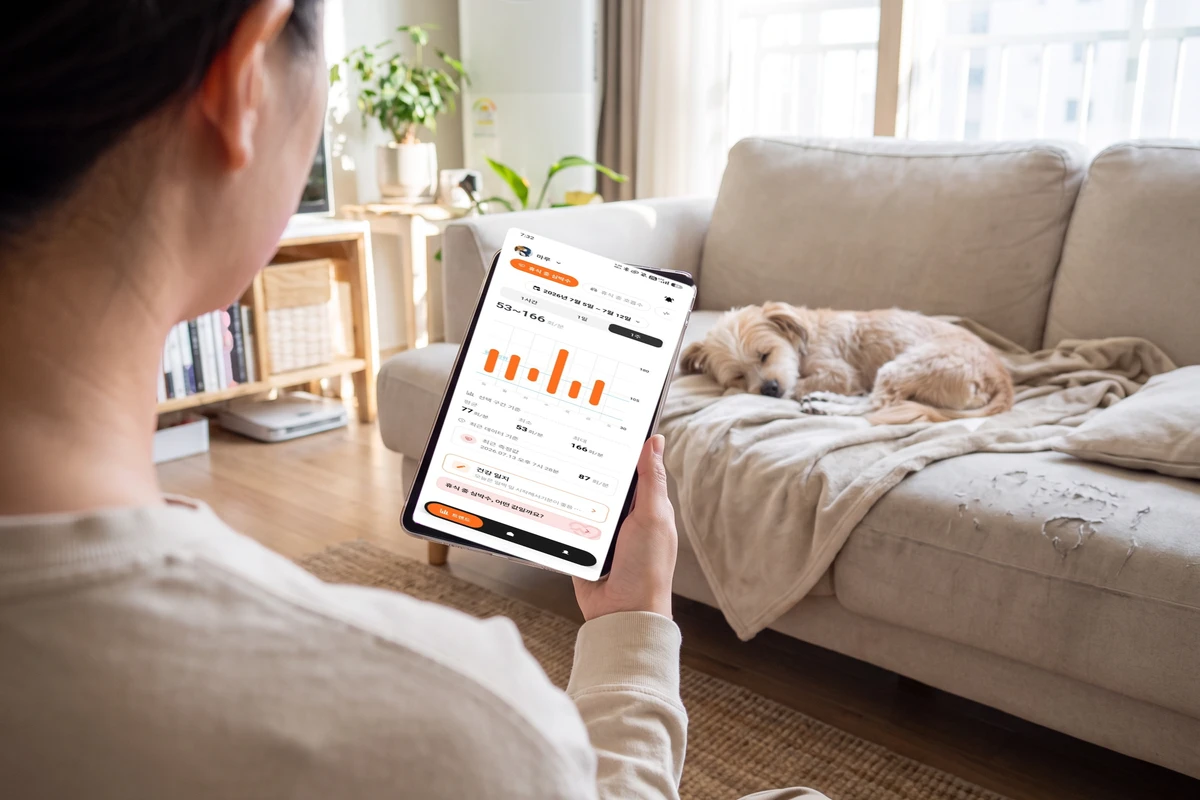
cotons ai's Sense 1 Home records resting respiratory rate, resting heart rate and activity level automatically while a dog rests. It works from BCG, which reads the small movements of the body, together with a 6-axis IMU sensor, so the numbers accumulate in the app by date without anyone holding a stopwatch. If you want to know what resting heart rate means, resting heart rate in dogs covers it separately.
Once records build up, you can look back at the values day by day exactly as they were. Instead of saying "her breathing has seemed fast lately," you can show the resting respiratory rate over the last three weeks. You can also see how activity shifted after you eased the walks.
Sense 1 Home is not a device that identifies illness. The records are there so you can see your dog's numbers with your own eyes, and how to read them is decided at the clinic.
Frequently asked questions
My dog was diagnosed with heart disease. Can I still take them for walks?
In many cases dogs diagnosed with heart disease are advised to keep walking with the intensity reduced rather than stopping altogether. Stopping activity entirely costs muscle and makes weight harder to manage. Walking the same route more slowly, avoiding hills and hot hours, and resting the moment panting starts earlier than usual are the usual ways to ease it. Some conditions do call for activity restriction, so check with your vet first.
How many breaths per minute while asleep means I should call the clinic?
Research reports that healthy adult dogs mostly stay under 30 breaths per minute while asleep. Your own dog's reference value is set by your vet, so if the count runs clearly above your own records for several days in a row, take those records and call the clinic. A single high night can come down to posture or room temperature, which is why the case rests on several days of data.
How much should I reduce the sodium in my dog's food for heart disease?
How far sodium is restricted depends on the stage of heart disease, and severe restriction is not recommended in the early stage. Before changing the food, it is usually more effective to review the daily items: jerky, cheese, table scraps and the treat used for medication. The specific figures and any food change are set by the vet who knows your dog's condition.
My dog is panting. Is it the heart?
Panting alone is hard to attribute. Heat, excitement, pain, stress and medication can all bring it on. Record it instead of trying to settle the cause. Note when it happened, what your dog was doing, and how long it lasted, and you have something to pass on at the appointment.
How often should we go back for rechecks after a heart disease diagnosis?
The recheck interval varies with the stage of disease, the medication in use and your dog's age, so follow the schedule your vet sets. What you handle is bringing the values you recorded at home in between, without gaps. Sleeping respiratory rate records, weight trends, cough frequency and changes in walk distance are all information the clinic uses straight away.
Can a dog health monitor track heart health?
A dog health monitor does not identify heart disease. A wearable like this keeps an automatic record of values that shift daily, such as resting respiratory rate, heart rate and activity level. Once records build up, you can see for yourself when the trend has moved away from normal and show it as it is at the appointment. Reading those values and making a judgement happens at the clinic.
Summary
- Count breaths for 60 seconds while your dog sleeps and write the number down with the date. Research found healthy adult dogs mostly under 30 per minute, and your dog's reference value is set by your vet.
- Weigh weekly on the same scale, and feel along the spine and hind legs at the same time.
- Do not cut sodium to an extreme. Check treats and medication treats before the main food.
- Do not stop walks. Ease the pace and the conditions. Whether a collar or a harness suits your dog is worth checking with your vet.
- Keep medication times fixed, and note missed doses and any vomiting.
- Write out emergency signs and watch-and-wait signs in advance, and keep the after-hours clinic details somewhere visible.
Closing
Caring for a dog with heart disease comes down to small daily records. Counting your sleeping dog's breaths tonight and writing the number down with the date is where it starts. After a few weeks, those numbers leave a clear picture of what normal looked like for your dog.
Sense 1 Home records resting respiratory rate, heart rate and activity level automatically while your dog rests. If you would rather see the trend on a graph than count by hand every day, start recording in the cotons ai app.
This article is for general information only and does not replace veterinary care. Sense 1 Home is not a medical device. Decisions about your dog's condition, along with medication, diet and exercise instructions, should follow your own veterinarian.
Sources
- Keene BW, Atkins CE, Bonagura JD, et al. ACVIM consensus guidelines for the diagnosis and treatment of myxomatous mitral valve disease in dogs. Journal of Veterinary Internal Medicine. 2019;33(3):1127–1140. https://onlinelibrary.wiley.com/doi/10.1111/jvim.15488
- Rishniw M, Ljungvall I, Porciello F, Häggström J, Ohad DG. Sleeping respiratory rates in apparently healthy adult dogs. Research in Veterinary Science. 2012;93(2):965–969. https://pubmed.ncbi.nlm.nih.gov/22178275/
- Porciello F, Rishniw M, Ljungvall I, et al. Sleeping and resting respiratory rates in dogs and cats with medically-controlled left-sided congestive heart failure. The Veterinary Journal. 2016;207:164–168. https://pubmed.ncbi.nlm.nih.gov/26639824/
- Freeman LM. Cachexia and sarcopenia: emerging syndromes of importance in dogs and cats. Journal of Veterinary Internal Medicine. 2012;26(1):3–17. https://onlinelibrary.wiley.com/doi/10.1111/j.1939-1676.2011.00838.x